

Why is UV Cure Epoxy Adhesive Not Curing Completely?
UV cure epoxy adhesives represent a cornerstone of modern bonding technology, prized for their rapid curing times, strong bonds, and versatility across industries such as electronics, optics, medical devices, and automotive manufacturing. These adhesives polymerize under ultraviolet (UV) light exposure, typically in the 320–400 nm wavelength range, transforming from a liquid or gel state into a durable solid through a photoinitiated crosslinking reaction. Unlike traditional epoxies that rely on heat or two-part mixing, UV cure systems offer “on-demand” curing, enabling precise control and minimizing waste.
However, incomplete curing—manifesting as tacky surfaces, reduced bond strength, or brittle failure—remains a persistent challenge. This phenomenon can lead to product failures, costly rework, and safety issues in critical applications. Understanding the root causes of incomplete curing is essential for engineers, technicians, and manufacturers to optimize processes and ensure reliability. This article explores the multifaceted reasons why UV cure epoxy adhesives fail to cure completely, drawing on material science principles, practical troubleshooting, and industry case studies. By examining factors from light source limitations to environmental interferences, we provide actionable insights to mitigate these issues.
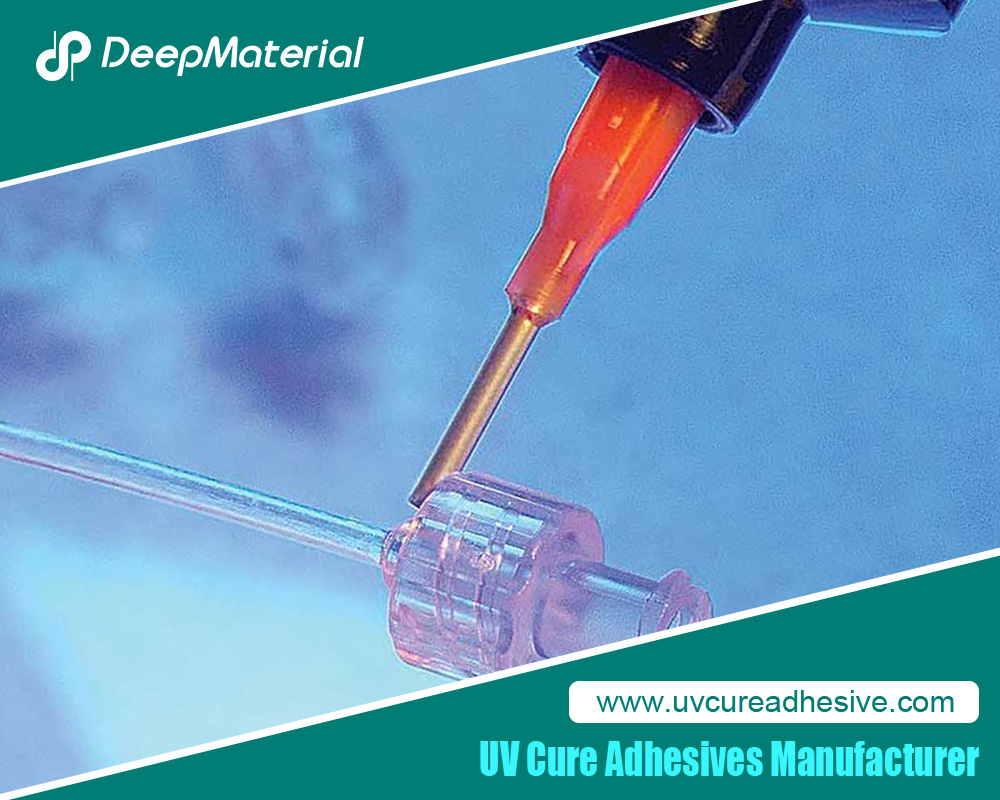
Understanding the UV Curing Mechanism
To diagnose incomplete curing, one must first grasp the photochemical process at its core. UV cure epoxy adhesives contain epoxy resins, photoinitiators (e.g., iodonium or sulfonium salts), and often reactive diluents or fillers. Upon UV exposure, photoinitiators absorb photons and generate reactive species—cations in cationic systems or free radicals in hybrid formulations—that initiate ring-opening polymerization of epoxy groups.
Ideal curing requires sufficient photon flux to activate all photoinitiators, propagating the chain reaction until monomer conversion reaches 90–99%. Incomplete curing occurs when this threshold is not met, leaving unreacted monomers or oligomers. Factors disrupting this include insufficient energy delivery, inhibition of the reaction, or material incompatibilities.
Insufficient UV Light Intensity or Exposure Time
The most common culprit for incomplete curing is inadequate UV energy delivery. Light sources degrade over time—mercury vapor lamps lose 50% output after 1000 hours, while LED systems (365–405 nm) offer longer life but narrower spectra mismatched to photoinitiators.
Case in point: In electronics assembly, a manufacturer using a 365 nm LED array reported tacky bonds despite 30-second exposure. Radiometer measurements revealed irradiance dropped to 50 mW/cm² due to dust on lenses, far below the adhesive’s 200 mW/cm² requirement. Cleaning and recalibration resolved the issue.
Exposure time must account for conveyor speeds in automated lines. A 10% speed increase without adjusting intensity halves the dose, leaving surface cure while the bulk remains liquid. Shadowing in complex geometries exacerbates this; light must reach all adhesive areas, often requiring multiple-angle irradiation or fiber-optic wands.
Solutions include regular radiometer calibration (per ISO 9001 standards), using broad-spectrum lamps for versatile formulations, and integrating feedback systems that halt production if dose falls below thresholds.
Wavelength Mismatch Between Source and Adhesive
Photoinitiators have specific absorption peaks; a mismatch renders them inert. For instance, Irgacure 184 absorbs maximally at 246 nm, ineffective under 395 nm LEDs. Modern epoxies often use “through-cure” initiators like SpeedCure 976 (peak ~370 nm), but legacy systems fail with LED upgrades.
In a medical device application, switching from mercury lamps (broad output including 365 nm) to 405 nm LEDs caused 40% uncured adhesive in catheter bonding. Spectral analysis showed the new LEDs missed the initiator’s 350–380 nm window. Reverting or adding dual-wavelength systems restored full cure.
Manufacturers must verify compatibility via datasheet spectra and bench-test with proposed lamps. Emerging tunable LEDs (e.g., Phoseon FireJet) allow wavelength optimization, reducing mismatch risks.
Oxygen Inhibition in Surface Layers
Though cationic UV epoxies are less susceptible than acrylates, oxygen can still quench excited photoinitiators or scavenge radicals in hybrid systems, creating a tacky “skin.” This is pronounced in thin films (<50 μm) or low-humidity environments.
Laboratory tests show oxygen inhibition reduces surface hardness by 20–30 Shore D. In optics, this causes haze or delamination. Mitigation includes inert gas blanketing (nitrogen purge), adding oxygen scavengers to formulations, or post-UV thermal bumps (60°C for 5 minutes) to drive residual cure.
An aerospace case study involved fiber-optic bonding where open-air curing left sticky residues. Enclosing the fixture in a nitrogen chamber achieved 98% conversion, verified by FTIR spectroscopy monitoring epoxy peak disappearance at 910 cm⁻¹.
Substrate and Adhesive Thickness Issues
Light penetration governs cure depth. Clear substrates like glass transmit UV efficiently, but opaque or tinted materials (e.g., carbon fiber composites) absorb or scatter light. Adhesive thickness >2 mm often requires “dark cure” mechanisms—photoinitiators that trigger latent thermal reactions post-UV.
In automotive headlamp sealing, 3 mm thick black-pigmented epoxy failed to cure internally under 365 nm light. Reformulating with higher initiator loads and thioxanthone sensitizers enabled 5 mm depth. Alternatively, dual-cure (UV + moisture) hybrids ensure bulk solidification.
Substrate reflectivity matters; matte black surfaces absorb 95% of UV, while polished metals reflect but create hot spots. Primers with UV-transparent fillers improve transmission.
Contaminants and Surface Preparation
Surface contaminants inhibit polymerization by blocking light or reacting with initiators. Oils, silicones, or amines from fingerprints reduce wettability and create cure voids.
FTIR analysis of failed bonds often reveals silicone peaks at 1260 cm⁻¹. In PCB assembly, flux residues caused 15% bond strength loss. Protocols mandate IPA wiping, plasma cleaning, or UV-ozone treatment to achieve <5° contact angles.
Moisture can hydrolyze epoxies pre-cure, forming weak boundaries. In humid environments (>60% RH), pre-drying substrates at 80°C prevents this.
Formulation and Storage Degradation
Expired or improperly stored adhesives degrade.Photoinitiators are light-sensitive; exposure during dispensing initiates premature gelling. Pot life for UV epoxies is typically 6–12 months at 5–25°C in opaque syringes.
A batch analysis showed a 6-month-old adhesive required 50% higher dose due to initiator decomposition. DSC (differential scanning calorimetry) revealed reduced exotherm, indicating lower reactivity.
Fillers like silica can scatter light if agglomerated; sonication restores uniformity. Pigments (TiO₂, carbon black) must be UV-transparent grades.
Environmental Factors: Temperature and Humidity
Curing is temperature-dependent; Arrhenius kinetics show reaction rates double every 10°C rise. Below 15°C, viscosity increases, slowing diffusion and reducing conversion. Above 40°C, rapid initiation causes micro-cracks from shrinkage.
In winter warehouse conditions (5°C), potting compounds remained liquid post-UV. Preheating fixtures to 25°C achieved full cure in 10 seconds versus 60.
High humidity introduces water, which competes in cationic curing, forming polyether linkages instead of rigid epoxies, reducing Tg (glass transition temperature).
Equipment and Process Control Failures
Conveyor lines with variable speeds, lamp height inconsistencies, or bulb misalignment deliver uneven doses. A 5 mm height increase reduces irradiance by 30% (inverse square law).
Integrating dosimeters and PLC interlocks prevents under-cure. In roll-to-roll coating, web tension affecting adhesive thickness caused 20% variability; closed-loop thickness control stabilized results.
Advanced Diagnostic Techniques
Troubleshooting requires data:
- Radiometry: Measures dose/irradiance.
- FTIR: Tracks epoxy conversion (910 cm⁻¹ peak).
- DSC: Quantifies residual exotherm.
- Rheometry: Monitors viscosity buildup.
- Microscopy: Reveals cure gradients.
In a failed windshield repair, cross-sectional SEM showed 200 μm cured layer atop 1 mm uncured, traced to insufficient intensity.
Case Studies
- Electronics Potting: A 500 mJ/cm² dose sufficed for clear epoxy but failed with fumed silica filler scattering light. Increasing to 1500 mJ/cm² and adding optical brighteners resolved it.
- Optical Lenses: Yellowing substrates absorbed 365 nm; switching to 395 nm LEDs with matched initiators prevented uncure and discoloration.
- Aerospace Composites: Shadowed areas in honeycomb structures required robotic multi-axis UV wands for 360° exposure.
Best Practices and Preventive Strategies
- Match lamp spectra to adhesive absorption (overlap >80%).
- Calibrate equipment quarterly; replace bulbs at 70% output.
- Use radiometers at workpiece level.
- Control environment: 20–25°C, <50% RH.
- Validate with statistically designed experiments (DOE).
- Train operators on contamination risks.
- Implement incoming material testing (viscosity, FTIR).
- Consider dual-cure backups for critical bonds.
Emerging Solutions
LED technology advances with higher outputs (>10 W/cm²) and multi-wavelength arrays. Photoinitiators like camphorquinone extend to visible light, reducing UV hazards. Smart adhesives with embedded sensors signal cure completion via color change or conductivity.
Nanofillers enhance light scattering constructively, improving depth. AI-driven process control predicts cure based on real-time variables.
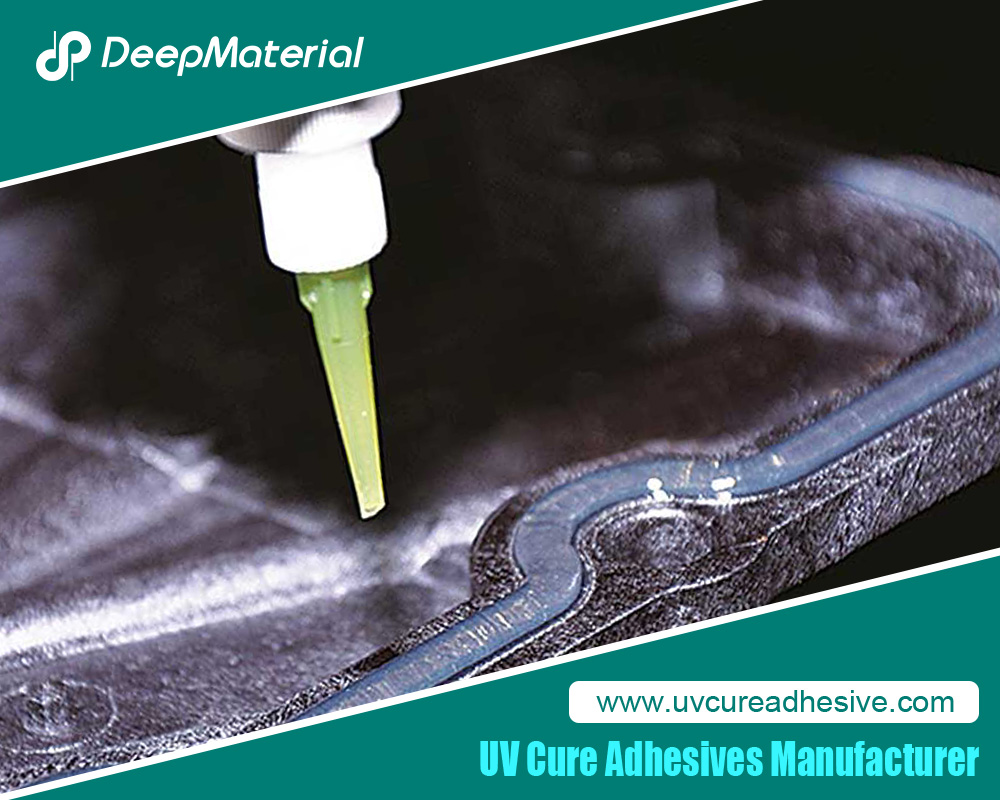
Conclusion
Incomplete curing of UV cure epoxy adhesives stems from interconnected failures in light delivery, material compatibility, environmental control, and process discipline. While rapid curing is the hallmark of UV technology, achieving complete polymerization demands rigorous attention to detail—from selecting matched light sources to maintaining pristine surfaces.
By systematically addressing these factors—through calibration, testing, and formulation optimization—manufacturers can eliminate tacky bonds and unlock the full potential of UV epoxies. As industries push for miniaturization and sustainability, mastering UV curing is not merely troubleshooting; it is a competitive imperative. Future advancements in light sources and smart materials promise even greater reliability, but the fundamentals outlined here remain the bedrock of success.
For more about why is UV cure epoxy adhesive not curing completely, you can pay a visit to DeepMaterial at https://www.uvcureadhesive.com/ for more info.

